Exclusive Fine Art Photography Blog | Aaron Feinberg: Metal, Acrylic or Giclée? How to Choose the Right Print Medium for Fine Art Photography
Aloha all!
One of the most common questions I get at the gallery – aside from "is that Peter Lik?" (it's not, but I'll take the compliment) – is about print mediums. Metal or canvas? What's a facemount? Does it even matter?
It matters. A LOT.
After 15+ years of printing fine art photography and running galleries on Kaua'i, I've seen how different mediums transform the same image in completely different ways. There's no single "best" – just the right choice for your image, your space, and the feeling you want to create. So let me break down the three archival mediums I work with and when each one shines.
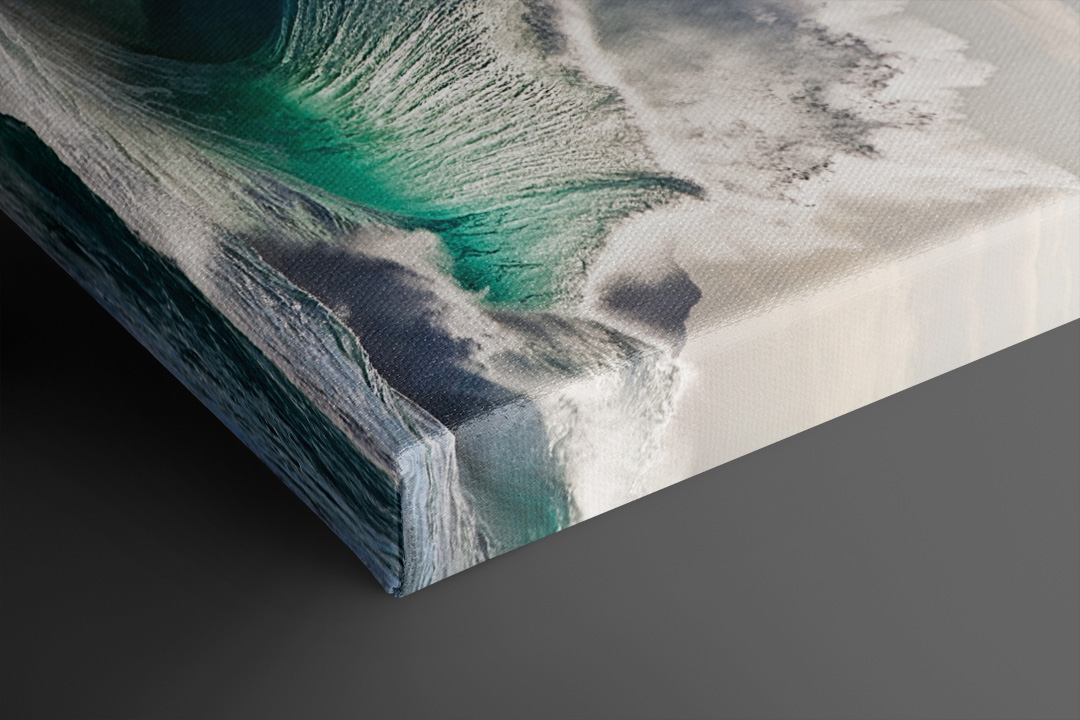
Giclée on Canvas: Timeless & Textured
Giclée (pronounced "zhee-clay") gets overlooked sometimes in the age of glossy everything, but there's a reason this medium has been trusted by fine artists for decades. The word itself comes from the French "to spray" – referring to the high-resolution inkjet process that deposits archival pigment onto fine art canvas with zero visible dot pattern.
What I love about giclée: it puts the light back into a photograph. That textured canvas surface diffuses light in a way that feels organic, almost painterly. For collectors who want their photography to live harmoniously alongside paintings or in spaces with a more classic aesthetic, giclée is often the perfect fit.
The practical side:
- Archival inks and protective coating ensure longevity for generations
- Lightweight and easy to hang
- No glare – works beautifully in rooms with lots of natural light or challenging lighting angles
- Sizes up to 55" x 200" and everything in between
- More traditional, warm presentation
For certain images – soft morning mist over Hanalei, the quiet intimacy of a forest interior, black and white work – giclée on canvas brings out qualities that glossier mediums can actually obscure. It's not about "less than." It's about different.
Metal Prints: Luminous & Modern
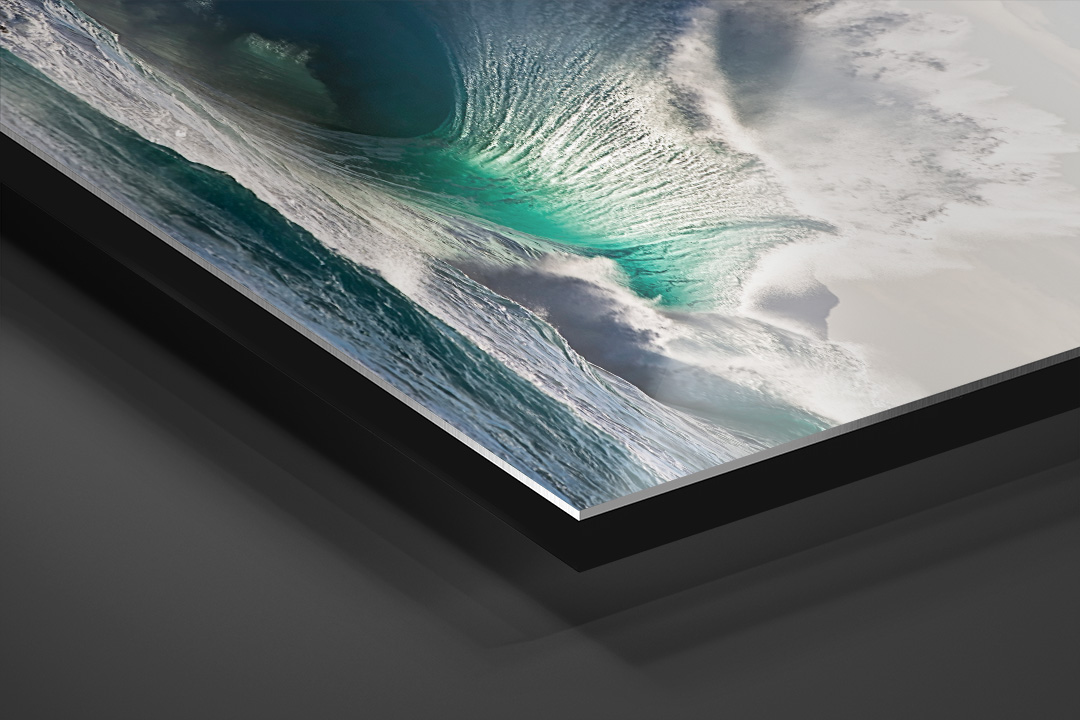
Metal prints use a process called dye sublimation – the image is literally infused INTO specially coated aluminum using heat and pressure. The result is this luminous, almost backlit quality that makes colors absolutely sing. There's a reason I've been displaying pieces in my galleries on metal for over 15 years.
That "glow" you see in a metal print comes from light reflecting off the aluminum substrate back through the image. For photographs with bold colors, dramatic skies, ocean blues, or that magical golden hour light – metal brings an intensity that's hard to replicate.
The practical benefits stack up too:
- Ultra-hard scratch-resistant surface
- Waterproof and UV protected – colors stay true for decades
- Available in high gloss, semi-gloss, or satin (matte) finish to minimize reflective issues
- Sizes up to 48x96" for statement walls
- Sleek, contemporary, frameless presentation
- Premium metal printing and presentation (not that thin inexpensive looking version)
Metal has become incredibly popular over the last decade, and I get it. When you see a vibrant Kaua'i sunset or the turquoise waters of the Na Pali Coast on metal, there's an immediacy that pulls you in. The image feels alive.
Facemount Acrylic: The Gallery Standard
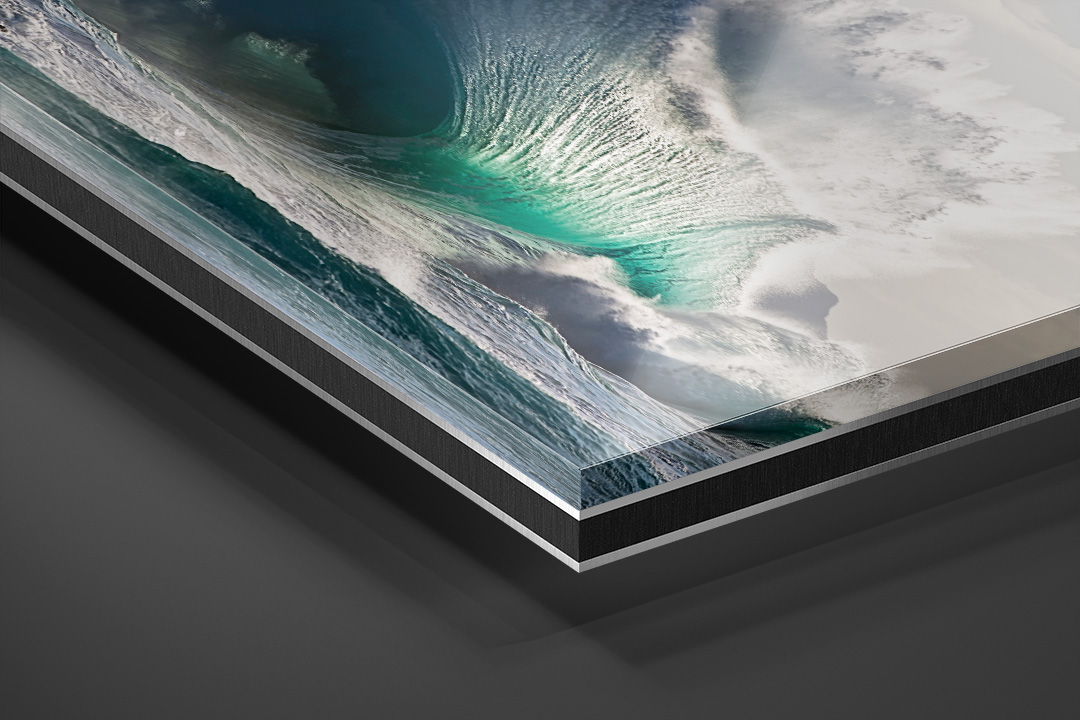
If you want to see what a photograph can truly become, facemount is the pinnacle of photographic printing.
I use Lumachrome HD paper – specifically designed for maximum color gamut with unbelievable resolution, clarity, and depth – face-mounted onto 1/8" crystal-clear acrylic that's shatter-resistant and UV-protected. The way light refracts through that acrylic creates something almost holographic. Images appear to glow from within.
When guests see a facemount piece in the gallery for the first time, they often don't believe it's a photograph. There's this moment where they lean in, trying to figure out how it's possible. That never gets old.
Facemount delivers:
- The highest detail, color accuracy, and perceived depth available
- Almost backlit appearance without any actual backlighting
- Non-glare acrylic options available for challenging spaces (very popular)
- Sizes up to 60x120" for truly monumental pieces
- Museum-quality presentation favored by serious collectors
The investment is higher – facemount runs roughly 20-30% more than metal at the same size. But for collectors building a legacy collection, or for that one statement piece meant to anchor a room for decades, facemount is what I recommend.
So Which Print Medium Should You Choose?
Here's how I think about it:
| Choose Giclée Canvas when... | Choose Metal when... | Choose Facemount when... |
|---|---|---|
| You want a warm, textured, painterly feel | You want vivid colors with a luminous glow | You want maximum detail, depth & "wow factor" |
| The space has challenging light/glare | The space suits a modern, frameless look | You're building a serious collection |
| The image is softer and/or intimate | The image has bold colors or dramatic light | The image deserves the absolute best presentation |
| You prefer traditional aesthetic | You want durability (beach house, humidity) | Size and impact are priorities |
The truth is, I never push a medium on anyone. When you're in the gallery, I'll show you the same image on different mediums and let YOU see the difference. Each has distinct strengths. The question I always ask: "Where is this piece going to live, and what do you want to feel every time you walk past it?"
Start there, and the right choice usually reveals itself.
All three mediums I offer are archival – meaning with proper care (no direct sunlight on any artwork), they'll maintain their beauty for generations. You're not choosing between quality levels. You're choosing between different ways of experiencing the same image.
If you have questions about which print medium works best for a specific piece or your space, reach out. This stuff matters to me – probably too much – and I'm always happy to nerd out about print quality with anyone willing to listen.
aF