Exclusive Fine Art Photography Blog | Aaron Feinberg: How to Choose the Right Size Art for Your Wall | A Simple Guide
Aloha all!
Here's something I hear almost every week at the gallery: "I love this piece, but I have no idea what size would work in my space."
I get it. Completely. You're standing in front of an image that moves you. Maybe it's a sunset over Hanalei Bay that takes you right back to your honeymoon, or a wave that captures exactly how you feel when you're in the ocean. And then your brain starts doing math. How wide is that wall again? Would 36 inches be too small? Would 48 be too big? What if I get it home and it looks ridiculous?
Here's what I tell people: most of our collectors have no idea what size will work best, and that's totally fine. After 15+ years of helping people find the right fit, I've learned that choosing art size isn't about precise measurements. It's about understanding a few simple principles.
Let me walk you through how I think about it.
The #1 Mistake: Going Too Small
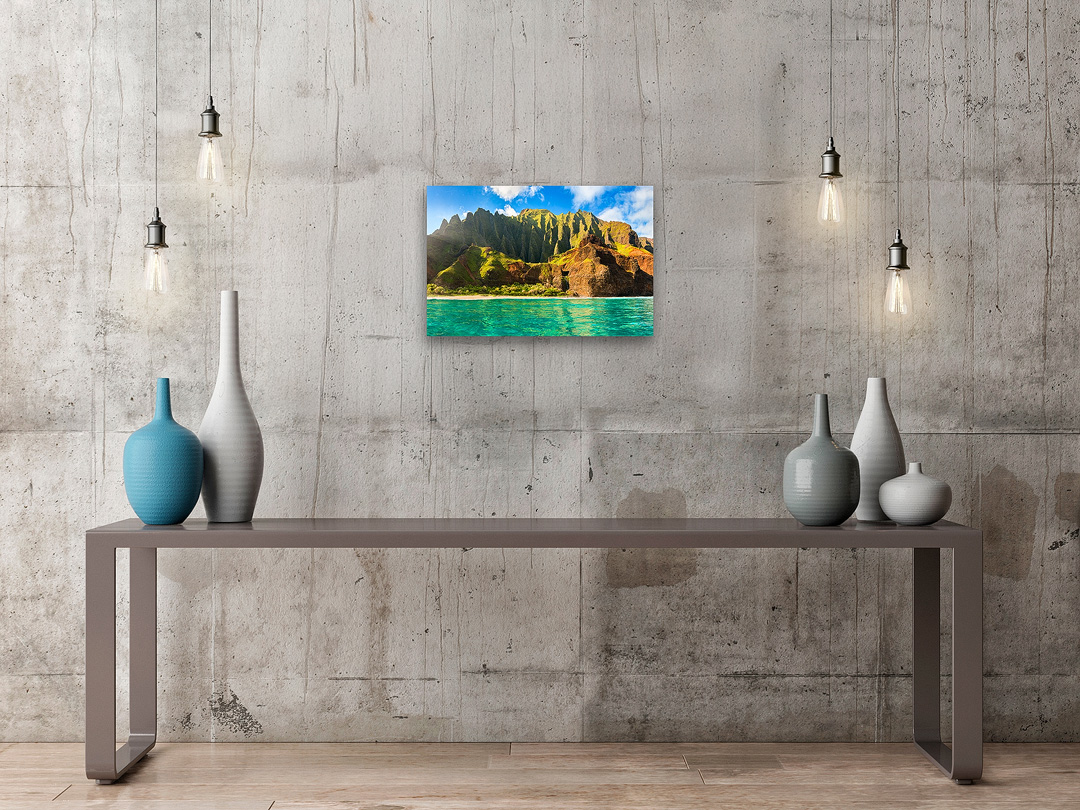
I'm just going to say it. Almost everyone goes too small the first time.
There's something psychological about it. A 24x36" print sounds big when you're reading numbers. Then you get it home, hang it on that wall in your living room, and it looks like a postcard floating in space.
Fine art photography is meant to immerse you. It's meant to be a window into another place. That doesn't happen when the piece is fighting against a vast expanse of empty wall. It happens when the art commands the space.
My general rule: when in doubt, go bigger than you think you need. I've had hundreds of collectors thank me for pushing them up a size. I've never once had someone come back and say "I wish I'd gone smaller."
The Simple Formula: Wall Width as Your Guide
If you want a starting point, here's a formula that works for most spaces:
Your art should fill 50-75% of the available wall width.
So if you have an 8-foot wall (96 inches) with furniture beneath it, you're looking at roughly 48-72 inches of art. That's a 40x60 or a 48x72 in my standard 2:3 ratio sizing. Substantial pieces that anchor the room.
For a smaller accent wall, say 5 feet wide, you'd be looking at 30-45 inches. That translates to a 24x36 or 30x45.
This isn't a rigid rule. Some spaces call for a piece that dominates. Others call for something more intimate. But 50-75% is a solid place to start.
Room-by-Room Thinking
Different spaces have different demands. Here's how I break it down:
Living Room / Great Room
This is typically where the largest piece lives. It's the room you spend the most time in, the room guests see first, the room that sets the tone for your home.
For a main wall above a sofa or as a focal point:
- 40x60 to 48x72 for standard ratios
- 30x90 to 40x120 for panoramics
These sizes create presence. When you walk into the room, the art announces itself.
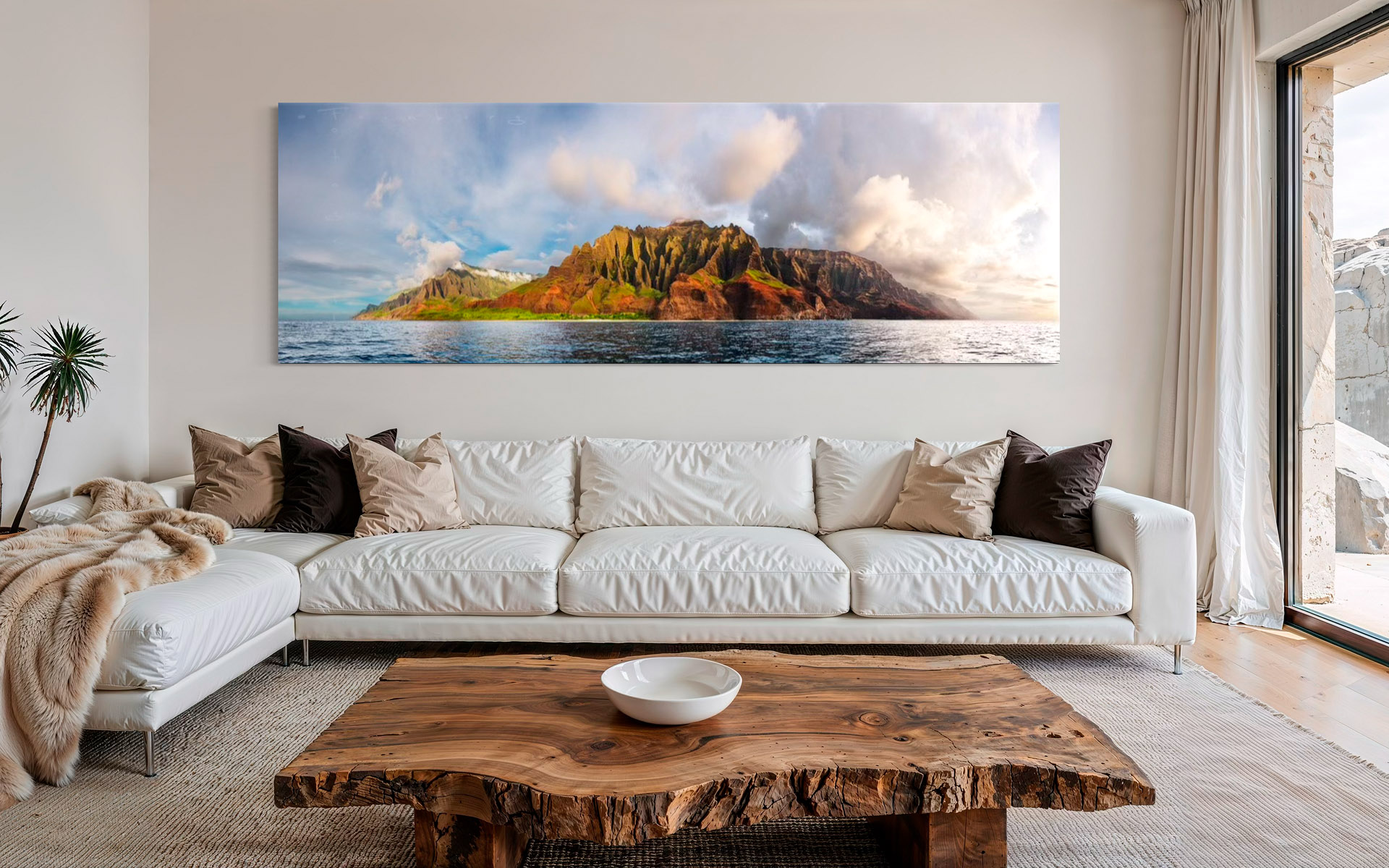
"Lost World" - Limited Edition of 300. Artist Proof of 30.
Dining Room
Dining rooms are interesting because people spend extended time seated, often facing a single wall. The viewing distance is consistent, and there's time for the eye to wander across detail.
I often recommend:
- 36x54 to 40x60 for standard ratios
- 20x60 to 30x90 for panoramics
Panoramic formats work particularly well in dining rooms. They draw the eye horizontally, complementing the shape of most dining tables.
Bedroom
Bedrooms can call for something that creates calm. The art above a bed or on the wall you see when waking up sets your emotional tone for the day.
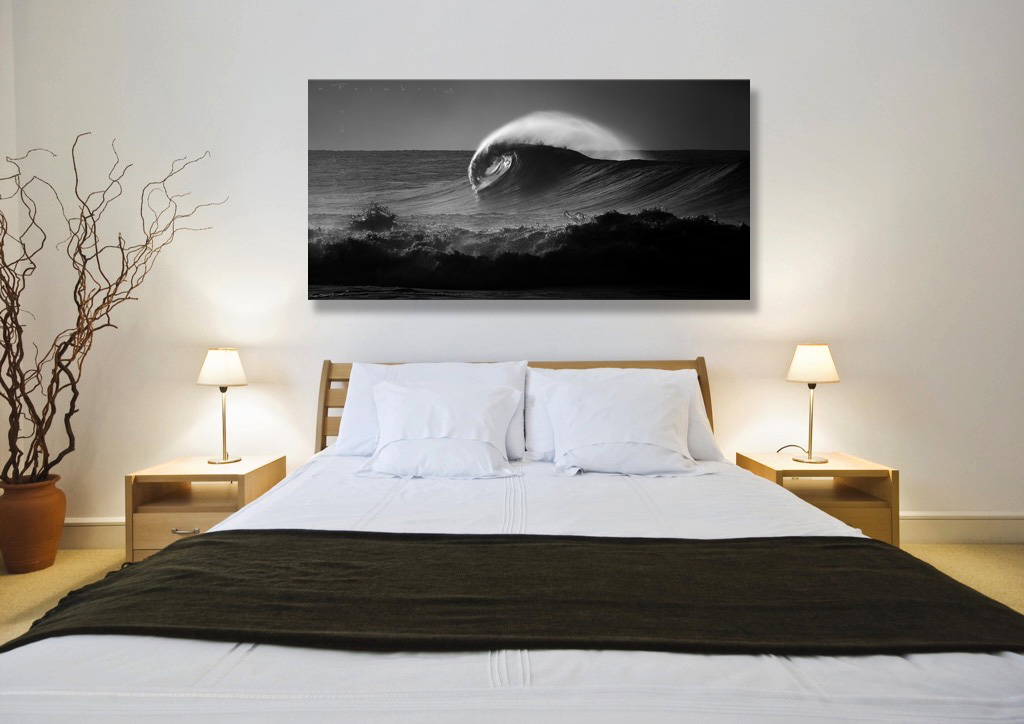
Most beds are 60-76" wide (queen to king), so:
- 30x45 to 40x60 for standard ratios (matching or slightly smaller than bed width)
- 20x60 for panoramics works beautifully above a king
In bedrooms, some people lean toward images with softer energy. Waterfalls, misty valleys, gentle seascapes rather than explosive wave shots...but art is entirely subjective so whatever feels right for your space works!
Hallways & Stairwells
These are the spaces people forget about, and they're often perfect for art. You pass through them constantly, and a well-placed piece turns a transition zone into a moment of pause.
Hallways typically work well with:
- 20x30 to 30x45 for standard ratios
- Vertical orientations can work magic in narrow spaces
- Consider a series of smaller pieces creating a gallery wall
Stairwells can handle surprisingly large pieces because you're viewing from multiple distances as you move through the space.
Home Office
You're staring at this wall for hours every day. Make it count.
Sizing depends on your desk setup, but:
- 24x36 to 36x54 is typically ideal
- Consider what you want to feel during your workday. Energy? Calm? Inspiration?
Bathrooms
Yes, art belongs in bathrooms. No, humidity won't destroy it. All my mediums are archival and sealed.
Bathrooms usually call for:
- 16x24 to 24x36 for standard ratios
- Smaller, more intimate pieces that reward close viewing
The Viewing Distance Factor
Here's something most people don't consider: how far will you be from the art when you're looking at it?
2-4 feet away (like in a bathroom or small office): smaller pieces work well, in the 16x24 to 24x36 range. You can appreciate detail up close.
6-10 feet away (typical living room viewing): medium to large pieces create impact without overwhelming. Think 30x45 to 48x72.
10+ feet away (great rooms, high ceilings): go big or the piece will feel lost. This is 40x60 and up territory.
Large pieces viewed from a distance create drama. Small pieces viewed up close create intimacy. Both are valid. Just be intentional about what you're creating.
What About Panoramics?
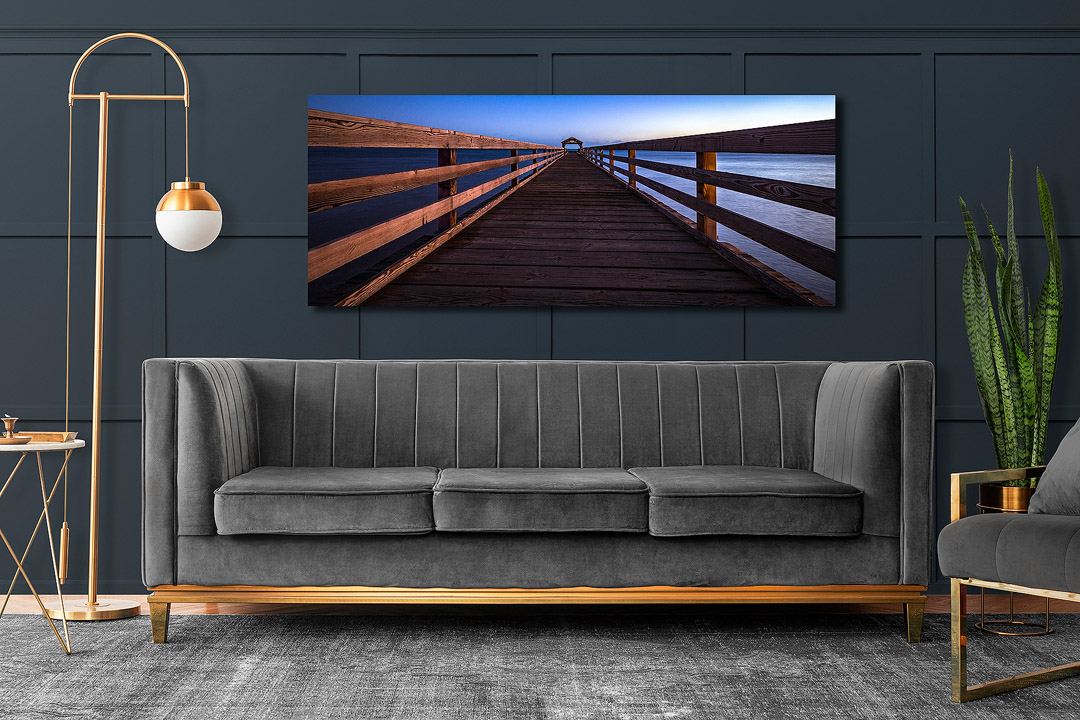
I shoot a lot of panoramic images. The Na Pali Coast, Kalalau Valley, sweeping seascapes. These 1:2, 1:2.5, and 1:3 ratio pieces have their own sizing logic.
Panoramics are horizontal by nature (though we have some vertical as well!), so they work best on:
- Wide walls with limited height
- Above long sofas or beds
- In dining rooms
- Above kitchen islands or bars
My panoramic sizes range from 10x20 all the way up to 40x120+. A forty-inch tall by ten-foot wide piece of the Na Pali Coast is...something else entirely. Statement doesn't begin to cover it.
The Ceiling Height Variable
Modern homes with 10-12 foot ceilings can (and should) go bigger. All that vertical space needs to be balanced, and a piece that would feel massive in a standard 8-foot ceiling room might feel perfectly proportioned with extra height.
Conversely, if you're working with lower or standard ceilings, be mindful of not overwhelming the vertical space. Horizontal panoramics often work well in these situations. They add visual width without competing with the ceiling.
Still Not Sure? Here's What We Do.
If you're stuck, send me a photo of your wall. Seriously.
I use visualization tools that let me mock up exactly how different sizes will look in your actual space. It removes all the guesswork. You'll see a 36x54 on your wall, then a 40x60, then a 48x72...and one of them will just click.
Email me a photo with a few reference measurements (even just "the couch below is 84 inches wide" helps), tell me which image you're considering, and I'll send you mockups. No charge, no obligation. I'd rather you get the right size than regret going too small.
We also have an app (aFeinberg Photography in your app store) that lets you visualize pieces in your space using your phone.
One Final Thought
Fine art photography is a long game. The piece you bring home today might be on your wall for decades. Your kids might inherit it. It becomes part of the backdrop of your life.
Given that, I always ask collectors: "If you're going to look at this image every day for the next twenty years, do you want it to feel immersive or subtle?"
Most people answer "immersive." And that means going bigger than your cautious brain wants you to.
Trust me on this one.
aF